Why Delhi & Mumbai Are the Hardest Airports for Business Jets | Winter Ops Explained | Safe Fly Aviation
Why Delhi & Mumbai Are the Hardest Airports for Business Jets
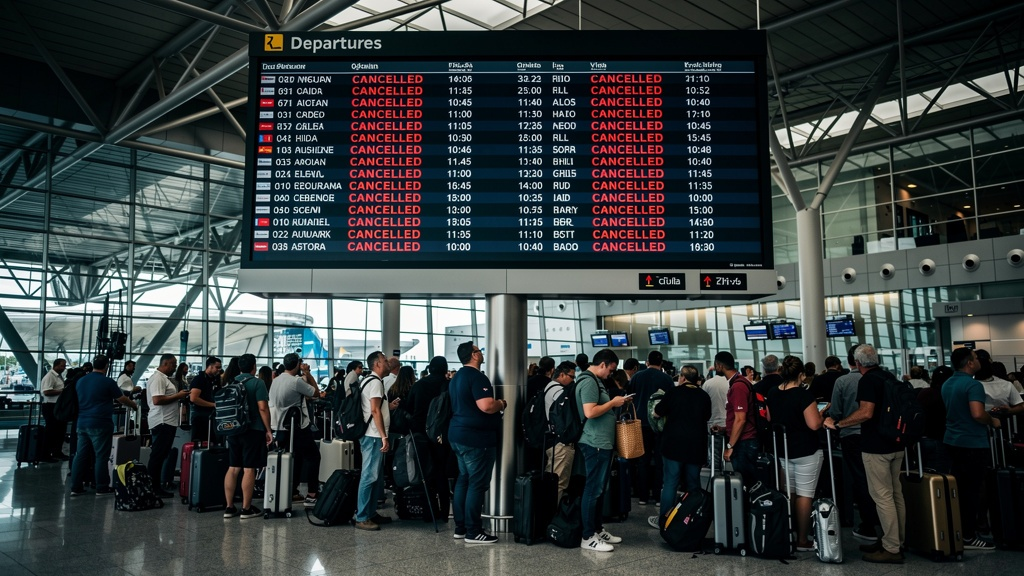
If you've ever planned a VIP or corporate movement into Delhi or Mumbai and thought, "Why does everything take longer here?"—you're not imagining it. In India, these two cities combine extreme demand with real operational constraints. Winter fog in Delhi and single-runway limitations in Mumbai can turn a simple itinerary into a slot-and-parking puzzle.
The Simple Truth
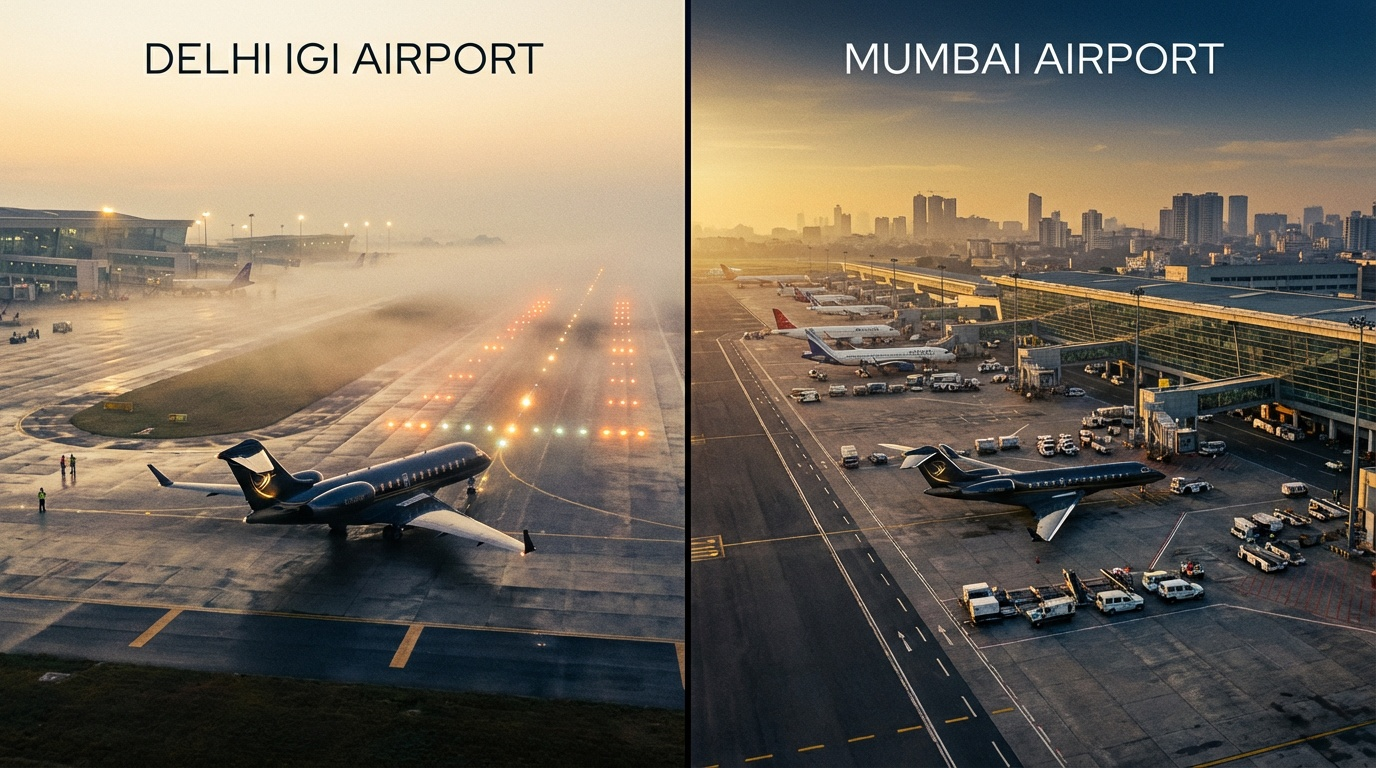
Delhi and Mumbai are difficult for business aviation for different reasons: Delhi becomes a winter visibility challenge at scale, and Mumbai is a capacity-and-space challenge in a city that never slows down.
At a Glance: Delhi vs Mumbai Challenges
| Factor | Delhi (IGI) | Mumbai (CSMIA) |
|---|---|---|
| Primary Challenge | Winter fog + visibility procedures | Single-runway operations + capacity limits |
| Peak Problem Period | December–February mornings | Year-round peak hours |
| Runway Configuration | Multiple runways, CAT III capability | Intersecting runways (single-runway operations) |
| Slot Constraints | Weather-dependent delays | Capacity ceiling (mid-40s movements/hour) |
| Parking Availability | Better during non-fog periods | Consistently tight during peaks |
1) Delhi: Fog + Volume = Slow Throughput, Even With Technology
Delhi's Indira Gandhi International Airport (IGI) is equipped to handle winter operations better than many airports, including advanced low-visibility capability. Yet during peak fog waves, passengers still see delays across the board—commercial and private alike.
The reason is straightforward: in dense fog, the airport may shift into CAT III / Low Visibility Procedures. Even when runway systems support low-visibility landings, overall movement rates reduce because taxiing, runway crossings, stand allocations and sequencing must be handled with greater spacing.
What Winter Fog Does to a Business Jet Schedule
- Slots become less predictable as arrival/departure capacity reduces.
- On-ground timing stretches (taxi-in, stand assignment, passenger steps, refuelling windows).
- Knock-on effects appear quickly: one delayed arrival affects the next sector.
- Early morning operations hit hardest—peak business travel window coincides with worst visibility.
Recent airline advisories have again warned travellers of delays at Delhi due to reduced visibility from winter fog, underscoring how quickly operations can shift in these conditions. For business jets, this means building flexibility into schedules and confirming slots closer to departure time.
2) Mumbai: Single-Runway Reality + Intense Demand
Mumbai's Chhatrapati Shivaji Maharaj International Airport (CSMIA) is one of the most constrained major airports in the region. A key operational factor is its intersecting runway layout, which means runways cannot be used simultaneously—so, in practice, Mumbai runs as a single-runway airport during normal operations.
When a city has relentless airline demand and limited runway throughput, business aviation must fit into tight windows. For corporate flyers, the pain points are usually: slot availability, parking constraints, and peak-hour congestion.
Declared Capacity Matters
Government communications have noted that Mumbai's runway configuration results in single-runway operations, with declared peak-hour capacity around the mid-40s aircraft movements per hour depending on HIRO / non-HIRO periods. For a high-demand hub, that is a hard ceiling—and every aircraft movement must be sequenced within it.
What this means: Unlike weather-based delays that eventually clear, Mumbai's capacity constraint is structural. Planning requires early slot confirmation and realistic ground-time expectations.
3) Parking and Stands: The Quiet Bottleneck VIP Travellers Don't See
For business jets, "getting a landing slot" is only part of the story. You also need a realistic plan for: aircraft parking, turnaround time, crew rest requirements, refuelling windows, and ground handling coordination.
Mumbai in particular can feel like a quick "drop-and-go" environment for visiting aircraft during busy periods. When parking is constrained, an itinerary that assumed long ground time may need to be redesigned—sometimes at short notice.
The Ground Reality Checklist
- Quick turns may be easier than long stays during peaks.
- Alternates should be planned early (not after the slot gets tight).
- Ground coordination becomes the difference between smooth and stressful.
- Refuelling windows can be affected by apron congestion—factor this into turnaround time.
- Crew rest facilities may need advance booking during peak periods.
4) What This Means for Corporate and VIP Planning
If your travel is time-sensitive—board meetings, plant visits, investor roadshows, family commitments—Delhi and Mumbai need a slightly different playbook. Here is what actually reduces risk in winter and peak traffic periods:
The Safe Fly Planning Checklist
- Avoid peak banks where possible; small timing shifts can make a big difference.
- Confirm slot + parking early (especially for Mumbai).
- Build buffer time around Delhi morning operations in December–February.
- Keep alternates ready and pre-brief the ground plan.
- Plan the mission, not just the flight: pickup windows, meeting timing, and return constraints.
- Monitor weather patterns for Delhi—visibility forecasts can inform departure timing.
- Coordinate ground handling 48–72 hours in advance, especially for Mumbai.
- Have backup communication channels with operations teams for real-time updates.
Real-World Scenario: Board Meeting in Mumbai
Executive needs to attend 10:00 board meeting in Mumbai, returning same day. Smart planning approach:
- Depart origin 06:00–07:00 to avoid peak arrival bank (allows weather buffer for Delhi origins)
- Confirm parking for 4–6 hours (meeting + buffer)
- Pre-arrange ground transport (airport delays can cascade to road traffic)
- Book return slot before departure—don't wait until meeting ends
- Keep alternate return timing ready if meeting runs long
Need a Realistic Delhi/Mumbai Plan This Winter?
Safe Fly Aviation supports corporate and VIP missions across India and worldwide with 15+ years of operational experience. Share your sector, passenger count, timing preferences and ground requirements—we'll advise the most practical routing and contingency approach.
Email: info@safefly.aeroSources & References (For Editorial Transparency)
- Airline advisories on Delhi fog-related delays (Economic Times, 15 December 2025)
- Delhi airport winter fog operations & CAT III upgrades / operational readiness (Times of India coverage; Delhi Airport official communications on fog preparedness)
- Mumbai runway configuration and declared movement capacity details (Press Information Bureau, 27 February 2024; AERA stakeholder consultation document, March 2025)
- Business aviation operational data from industry sources and airport operator technical documents
Note: Operational conditions can change quickly. Always confirm real-time slot, parking and weather advisories close to departure. This article provides general guidance based on typical operational patterns and is not a substitute for professional flight planning.