Why Indias Elite Are Choosing Private Jets for International Travel | Safe Fly Aviation

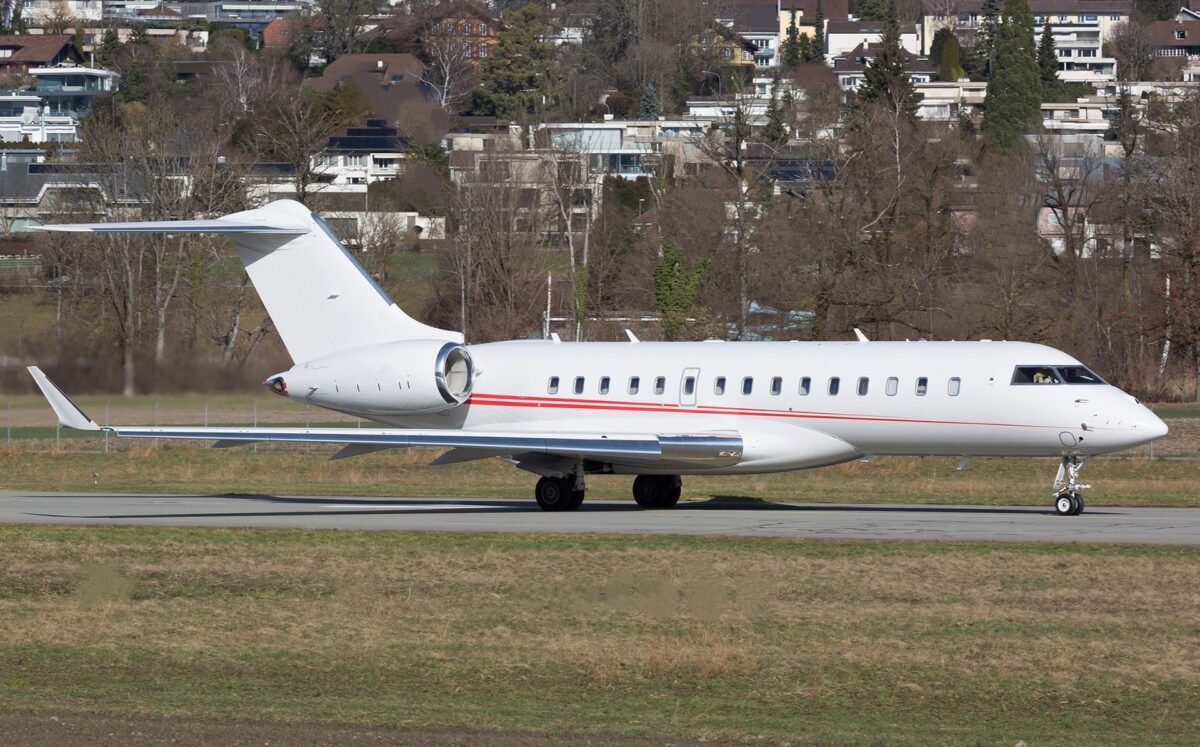
A Gulfstream on the apron at dusk — for India's UHNI travellers, this is the new normal.
Why India's Elite Are Choosing Private Jets for International Travel — And What They Know That You Don't
It isn't just about the leather seats. The real reasons India's ultra-high-net-worth community has quietly shifted to private international charter — and what separates a genuinely safe flight from a merely expensive one.
There is a moment, familiar to anyone who has spent serious time in India's business community, when a conversation about travel pivots. Someone mentions they flew to Geneva last week. Not the flight — just that they flew. The table understands. The subtext is everything: the private terminal, the 6 a.m. departure on their schedule, the deal closed at 35,000 feet. No one asks about the airline.
This shift has been accelerating quietly for the better part of a decade, but the post-pandemic years accelerated it dramatically. Charter enquiries from Indian clients for international routes grew significantly through 2023 and 2024, and by 2025 the market had developed enough depth — operators, brokers, FBOs — that flying privately from Mumbai, Delhi or Bangalore to virtually any destination in Europe, the Middle East or North America became a routine operational decision rather than a special occasion.
The question worth asking isn't why people do it. That part is obvious. The more interesting question is: what do the people who do it well know that others don't?
The Safety Conversation Nobody Has
Walk into almost any conversation about private aviation and within minutes you'll hear about the food, the seats, the speed of boarding. These things are real. They matter. But they are not why the most experienced private aviation clients — the ones who have been doing this for ten or fifteen years — choose their operators with such care.
Those clients talk about safety certifications. Not as a checkbox — as a genuine differentiator that affects their decisions in concrete ways.
The three standards that matter most in international private aviation are ARGUS Platinum, Wyvern Wingman and IS-BAO Stage 2 or Stage 3. These are not marketing badges. They are the product of rigorous, independent audits conducted by organisations with no commercial relationship with the operators they assess. An ARGUS Platinum rating, for instance, requires an on-site audit of the operator's entire safety management system, crew training records, maintenance practices and operational procedures. It is the highest tier ARGUS awards. Only a small fraction of the world's charter operators hold it.
"An operator can put any aircraft on a tarmac and call it luxury. The certifications tell you whether the people operating that aircraft have been held to a standard by someone who had nothing to gain from passing them."
— Charter industry veteran, cited in conversationThe problem is that this information is invisible to most first-time or occasional charter clients. You book through someone who shows you a beautiful interior photograph and a route map. The certification question simply never comes up. And for the vast majority of flights, nothing goes wrong — so the gap between a certified operator and an uncertified one remains invisible to the client.
Until it doesn't.
At Safe Fly Aviation, our position is blunt: we will not place a client aboard an operator that does not meet these standards, regardless of price, availability or urgency. This is not a marketing position. It is the policy that shapes every sourcing decision we make.

The Economics Are Not What You Think
The persistent misconception about private jet charter is that it exists in a financial category entirely separate from commercial travel — that it is a luxury purchase, like a yacht or a watch, where the price is part of the point. For the clients who use it most intelligently, this is exactly backwards.
Consider a practical scenario. A senior executive needs to travel from Delhi to Frankfurt for a two-day board meeting, then to Zurich, then home. On commercial airlines, this involves a connection, a loss of roughly a working day to transit, the risk of delays compounding across legs, and the complete absence of any privacy for the preparation work that happens between cities. Business class for two people — an executive and an assistant — approaches the cost of a light jet charter for the same routing. By the time you factor in an actual first-class cabin on a long-haul aircraft for both seats, on all three legs, the numbers are closer still.
- Time: A private routing DEL–FRA–ZRH–DEL saves approximately 14–18 hours of airport and transit time versus commercial connections
- Group rate: At four or more passengers, charter per-seat cost typically equals or beats first-class commercial on European routes
- Empty legs: When schedules allow some flexibility, empty-leg availability can reduce charter costs by 50–75% on popular routes
- Productivity: A dedicated cabin with secure Wi-Fi, a conference table and no interruptions is a working environment that commercial first class cannot replicate
This is before considering the qualitative value of what actually happens in the air. The deals that close, the documents reviewed, the phone calls made without concern for who is listening in the row behind. For a certain category of client, the aircraft is not transport. It is an extension of the office — a mobile conference room that happens to cover 900 kilometres an hour.
What a Good Broker Actually Does
The role of a charter broker is widely misunderstood, including by some clients who use one regularly. A broker is not simply a booking platform with a human on the end of a phone. Or rather — a good broker is not.
When a client calls with a routing, a date and a party size, the first thing a proper broker does is not search for the lowest price. It is to identify which operators are certified to the required standard, are appropriate for the routing, and have aircraft with the right specifications for the trip. Only within that qualified pool does the commercial conversation begin.
Beyond the aircraft itself, there is a substantial world of operational details that separate a seamless charter experience from an exhausting one. FBO selection — the Fixed Base Operator, meaning the private terminal facility — matters enormously at certain airports. Pre-clearance arrangements for international arrivals. Coordination with ground transport, hotels and connecting services. The handling of overflight permits, which for certain transcontinental routes must be obtained from multiple sovereign authorities weeks in advance.
None of this is visible to the client on the day. When it is done well, boarding is a four-minute process and the experience feels effortless. When it is done poorly — or not done at all — a client discovers at 11 p.m. that the permit for a particular airspace wasn't filed, or that the FBO at the destination has no ground transport arranged, or that the caterer received the brief for a different flight.

The Routes That Changed Everything
Historically, the practical limitation on private international aviation from India was range. The aircraft available in the mid-2000s that could be sourced at short notice were largely mid-size jets — capable of impressive flexibility within the subcontinent or the Middle East, but requiring technical stops for a London or New York routing. That technical stop adds time, breaks momentum and introduces an additional variable in an already complex operation.
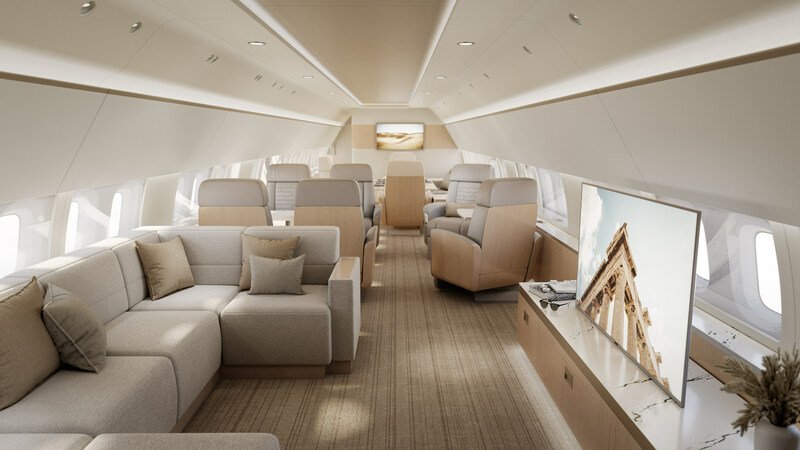
The arrival and proliferation of genuinely ultra-long-range aircraft — the Gulfstream G650ER, the Bombardier Global 7500, the Dassault Falcon 8X — changed the equation entirely. These aircraft are capable of non-stop flights from Mumbai or Delhi to virtually any destination in Europe or the United States. London in under ten hours. New York in under sixteen. Frankfurt, Zurich, Geneva, Paris — all non-stop, all in a full stand-up cabin with a separate sleeping area, a forward lounge, a galley producing restaurant-standard meals.
For India's UHNI community, the non-stop capability is not a marginal improvement. It eliminates the single largest friction point in long-haul private travel and transforms the experience into something qualitatively different from anything commercial aviation offers, at any price point.
"The first time you land in Geneva seven hours after leaving Mumbai without having touched another airport, without having queued once, without having been photographed or recognised or sat next to someone on a phone call — you understand why this exists."
— UHNI client, MumbaiPrivacy Is Not a Feature. It Is the Product.
The language used to market private aviation — luxury, comfort, convenience — does something unintentional: it positions privacy as one feature among several, when for the clients who value it most, privacy is the entire purchase.
India's business landscape in 2026 operates in an environment of intense scrutiny — regulatory, journalistic and social. For a promoter preparing a capital raise, an industrialist navigating a sensitive acquisition, a family managing a succession — the simple fact of who is on an aircraft, who they are travelling with and where they are going can be information of significant commercial value to the wrong people. Commercial airports are, by design, observable. Private terminals are not.
The same logic applies to the flight itself. A dedicated cabin is the only environment in which genuinely confidential conversation is possible at altitude. No shared armrests. No overhead bins accessed by strangers. No cabin crew visible unless summoned. The aircraft is, for the duration of the flight, entirely yours.
A Practical Guide to Your First International Charter
When to book
For a standard international routing — say, Mumbai to London — a booking window of five to seven days gives a broker adequate time to source the right aircraft, confirm certification, arrange permits and brief the crew properly. Short-notice charters of under 48 hours are absolutely possible on most routes, but the pool of certified aircraft narrows as the window compresses. If your schedule allows even a week's notice, the result will be markedly better.
What to tell your broker
The more context, the better the result. The number of passengers, obviously, but also: whether there are dietary requirements or preferences; whether the flight will involve working, sleeping or a combination; whether there are ground logistics to coordinate at either end; whether the return date is flexible. A broker who understands the full picture can make decisions that a booking form never could.
Questions worth asking
Any reputable broker should be able to answer, without hesitation, what safety certifications the proposed operator holds and when they were last audited; whether the crew have recent experience on the specific routing; what contingency exists if the primary aircraft is unavailable the morning of departure; and what the ground handling arrangements are at the destination. If the answers are vague, that is information.
On pricing
Charter pricing is not linear and it is not always intuitive. An operator quoting significantly below market rate deserves more scrutiny, not less. The cost of operating a correctly certified, properly maintained ultra-long-range aircraft cannot be compressed beyond a certain floor without something being cut — and what gets cut tends to be invisible to the client. A transparent, itemised quote from a reputable broker includes aircraft positioning costs, crew fees, landing charges, overflight permits and catering. If these are bundled into an opaque total, it is reasonable to ask for the breakdown.
Private international aviation from India has matured into something that works — when done correctly. The knowledge gap between clients who navigate it well and those who don't is not about money. It is about knowing which questions to ask and having a broker who is genuinely on your side when you ask them.
Safe Fly Aviation operates as a dedicated private aviation brokerage serving UHNI, HNI and corporate clients across India, the Middle East and Europe. We source exclusively from ARGUS Platinum, Wyvern Wingman and IS-BAO certified operators, and our team is available around the clock for enquiries, quotes and operational support.
We'll have a personalised quote on your desk in under 60 minutes — 24 hours a day.